THE NEW WAR ON ADDICTION
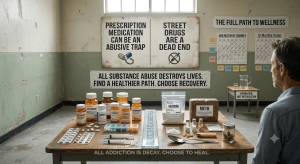
The drug may change. The dependency may not.
There is a new and increasingly important conversation that families, recovering individuals and rehabilitation professionals need to have.
We have spent years talking about illegal drugs.
Heroin.
Chitta.
Opioids.
Alcohol.
Cannabis.
But there is another problem that can remain hidden behind the word “medicine.”
Prescription-medicine misuse.
A medicine can be legitimate when prescribed for a genuine medical reason and taken exactly as directed.
But when a person begins taking a prescription medicine without appropriate medical supervision, takes more than prescribed, uses somebody else’s prescription, or takes it to experience a high, the situation can become misuse and potentially another substance-use problem. NIDA defines prescription-drug misuse to include taking medication differently from prescribed, taking another person’s prescription, or taking medication to get high.
And this is where families need to become more aware.
1. THE BIG QUESTION: DID THE DRUG CHANGE — OR DID THE ADDICTION?
Imagine a person who has been dependent on heroin.
They stop using heroin.
Everyone thinks:
“He is cured.”
But then the person begins seeking another substance.
The name has changed.
The packaging has changed.
The source may have changed.
But the behaviour has not.
The person is still chasing:
relief → escape → intoxication → craving → use → temporary relief → craving again.
This is not necessarily recovery.
It may be a change in the substance while the addictive pattern remains.
That distinction is extremely important.
2. MEDICINE IS NOT THE SAME AS ABUSE — BUT MEDICINE CAN BE MISUSED
This point must be understood clearly.
There are medicines that doctors prescribe appropriately for pain and other medical conditions.
There are also evidence-based medications that clinicians may use in the treatment of opioid dependence. WHO currently recommends several treatment options, including opioid agonist treatment with methadone or buprenorphine, alongside psychosocial support.
Therefore, it would be incorrect to say:
“Every medicine used during addiction treatment is abuse.”
But it is equally important to recognize another reality:
A prescription does not automatically make misuse safe.
When a person uses medication:
- to get high,
- without a prescription,
- in a way different from medical instructions,
- at higher amounts than prescribed,
- to replace an illicit drug without appropriate clinical supervision,
- or because they have developed a psychological pattern of constantly seeking substances,
the situation can become substance misuse.
Prescription opioids can cause dependence, overdose and even death, and overdose risk can rise with higher doses, longer or more frequent use and combinations with other substances.
3. “I HAVE STOPPED HEROIN” — BUT WHAT HAPPENED NEXT?
This is where families can sometimes be misled.
A person may genuinely stop using heroin.
But stopping heroin does not automatically mean that the underlying addiction has been resolved.
The family may see:
No heroin.
But they may not see:
New cravings.
New substance-seeking behaviour.
New misuse.
New tolerance.
New dependency.
New risks.
The substance may be different.
The pattern can remain the same.
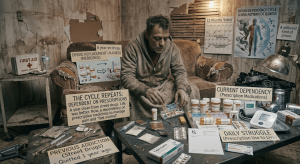
That is why recovery should be measured by behaviour and lifestyle, not simply by the name of the substance currently being used.
4. THE “LEGAL” LABEL CAN CREATE A FALSE SENSE OF SAFETY
One of the biggest dangers is the psychological difference between:
“drug”
and
“medicine.”
A person may think:
“It is prescribed, so it cannot be dangerous.”
That assumption is false.
Prescription medicines can have serious risks when misused.
CDC notes that prescription opioids carry risks of addiction, overdose and death. The risk can also increase when opioids are combined with alcohol, benzodiazepines, other sedatives or other opioids.
The word “medicine” should never become a license for misuse.
5. TOLERANCE — WHEN THE BODY STARTS DEMANDING MORE
Repeated exposure to certain drugs can lead to tolerance, meaning the body becomes less responsive to the same amount over time.
The person may begin thinking:
“This amount is not enough anymore.”
Then the amount increases.
Then the person begins thinking about the next dose.
This can create a dangerous cycle.
More tolerance can mean more risk.
CDC specifically identifies increasing tolerance with prescription opioid use as a risk factor for opioid use disorder and potentially fatal overdose.
6. ONE SUBSTANCE CAN BECOME MULTIPLE-SUBSTANCE USE
Another emerging concern is polysubstance use — using more than one psychoactive substance.
A person may move between substances depending on:
- availability
- emotional state
- cravings
- peer influence
- perceived effect
- withdrawal or discomfort
- access to medicines
This can make recovery more complicated.
The person may no longer be dealing with one substance.
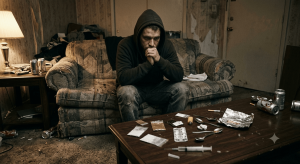
They may be dealing with an entire pattern of substance-seeking behaviour.
The problem becomes bigger than the original drug.
7. OVERDOSE DOES NOT ONLY HAPPEN WITH STREET DRUGS
This is an important message for every family.
A prescription label does not make overdose impossible.
Opioid medicines can cause life-threatening breathing problems when taken improperly. CDC states that anyone taking prescription opioids can be at risk of overdose, and risk increases with higher doses, longer use and certain combinations with other substances.
WHO also states that opioid overdose can cause breathing difficulties and death.
Therefore:
Overdose awareness must include medicines as well as illicit drugs.
The message should not be:
“Illegal drugs are dangerous, medicines are safe.”
The better message is:
“Any substance capable of affecting the brain and body must be used responsibly and, when prescribed, under appropriate medical supervision.”
8. THE MOST DANGEROUS SENTENCE: “I NEED IT TO FEEL NORMAL.”
This sentence deserves attention.
A person may begin saying:
“I cannot function without it.”
“I need it to sleep.”
“I need it to calm down.”
“I need it because withdrawal is difficult.”
This can become psychologically powerful.
The person may stop asking:
“How do I become healthy?”
and start asking:
“Which substance will make me feel normal?”
That is a very different mindset.
Recovery must change the question.
Instead of:
“What can I take?”
we should encourage:
“What can I change?”
9. RECOVERY IS MORE THAN MANAGING WITHDRAWAL
Withdrawal can be difficult.
It is a real physiological process, and some people may require medical assessment or medically supervised treatment.
But recovery should not be reduced to the question:
“How do we get through withdrawal?”
The larger question is:
“How do we build a life in which the person no longer wants to return to the old lifestyle?”
That requires much more than focusing on a substance.
It requires:
- Mindset
- Routine
- Discipline
- Emotional regulation
- Counselling
- Healthy relationships
- Responsibility
- Purpose
- Self-care
- Meaningful activities
- Long-term support
10. CHANGE THE POINT OF CONCERN
One of the principles we emphasize at Rehab Start A Fresh is:
Change the point of concern.
An addicted mind can become completely occupied with:
When will I get it?
Where will I get it?
How much will I get?
What will I take next?
Recovery requires redirecting that attention.
Instead:
When will I exercise?
When will I meditate?
What healthy activity will I do today?
What responsibility will I complete?
Who can I help?
What can I learn?
How can I improve myself today?
Change what the mind keeps returning to.
When the point of concern changes, the direction of life can begin to change.
11. SUBLIMATION — TURNING ENERGY TOWARDS SOMETHING POSITIVE
Recovery requires learning what to do with emotions, frustration, restlessness and unused energy.
One useful psychological idea is sublimation — redirecting difficult emotions or impulses into constructive activities.
Instead of allowing anger to become destructive behaviour:
exercise.
Instead of allowing restlessness to become substance-seeking:
practice yoga.
Instead of allowing loneliness to become isolation:
connect with supportive people.
Instead of allowing negative thoughts to dominate:
meditate, reflect and engage in meaningful activity.
Instead of returning to the old routine:
build a new one.
Do not simply remove the old habit.
Replace the space it occupied with something healthier.

12. YOGA — TRAINING THE MIND TO PAUSE
Yoga should not be presented as a magical cure for addiction.
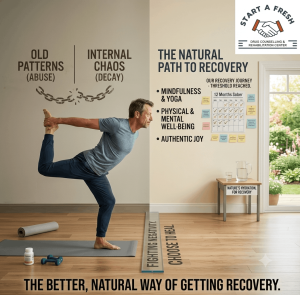
But as part of a structured recovery program, yoga and mindfulness practices can become valuable tools for developing healthier routines, body awareness, relaxation and self-regulation.
Yoga encourages the person to:
- Slow down
- Breathe consciously
- Focus attention
- Become aware of the body
- Practice discipline
- Spend time away from chaotic environments
Sometimes recovery begins with learning how to pause before reacting.
13. MEDITATION — LEARNING TO OBSERVE THE MIND
The addicted mind can become highly reactive.
A thought appears.
A craving appears.
An emotion appears.
And the person immediately wants to act.
Meditation can help develop the practice of observing thoughts without immediately reacting to them.
The goal is not to empty the mind completely.
The goal is to develop greater awareness.
“I am having a thought” is different from “I must act on this thought.”
That small space between thought and action can become extremely valuable during recovery.
14. HEALTHY PEOPLE CREATE A HEALTHIER ENVIRONMENT
Recovery becomes difficult when someone continuously returns to people who encourage the old lifestyle.
That is why supportive relationships matter.
A healthy recovery environment should encourage:
- Honesty
- Discipline
- Responsibility
- Positive thinking
- Respect
- Healthy communication
- Personal growth
Your environment teaches you what is normal.
If chaos becomes normal, discipline feels strange.
If discipline becomes normal, chaos begins to feel uncomfortable.
15. ROUTINE IS NOT BORING — ROUTINE CAN BE RECOVERY
Addiction often creates an unpredictable lifestyle.
Sleep becomes irregular.
Meals become irregular.
Responsibilities disappear.
Time loses structure.
Recovery needs the opposite.
A structured day can provide direction.
Wake up on time.
Maintain personal hygiene.
Eat properly.
Exercise.
Attend counselling.
Practice yoga.
Meditate.
Complete responsibilities.
Rest appropriately.
Sleep on time.
Repeat.
Discipline creates stability.
And stability creates space for growth.
16. PUNCTUALITY — A SMALL HABIT WITH A BIG MESSAGE
Being punctual may appear insignificant.
It is not.
When a person starts arriving on time, completing tasks, following schedules and respecting commitments, they are practicing responsibility.
Recovery is built through small actions repeated consistently.
Five minutes early.
One responsibility completed.
One promise kept.
One healthy choice.
Day after day.
These small choices can become a completely different lifestyle.
17. COUNSELLING: CHANGE THE THINKING, NOT JUST THE BEHAVIOUR
A person may stop taking a substance while still thinking exactly like an addicted person.
That is why counselling matters.
Counselling can help a person explore:
- Triggers
- Emotions
- Thought patterns
- Relationships
- Behaviour
- Responsibility
- Self-esteem
- Decision-making
- Relapse risks
- Future goals
The objective is not simply:
“Don’t use.”
It is:
“Learn why you used, understand yourself better, and learn healthier ways to respond.”

18. WHAT WE DO AT REHAB START A FRESH
At Rehab Start A Fresh, our focus is on changing the lifestyle around addiction.
We believe that a person needs an environment where they can step away from the chaos of their previous routine and begin developing healthier habits.
Our recovery-oriented approach includes:
🧘 Yoga & Mindfulness
To encourage focus, awareness, discipline and a healthier mind-body connection.
🧠 Counselling
To understand behaviour, emotions, triggers and thought patterns.
🌿 Structured Living
To establish routine, responsibility, cleanliness, punctuality and discipline.
🤝 Supportive Community
To surround individuals with people who encourage positive change.
❤️ Family Involvement
Because addiction affects the family and recovery often requires rebuilding trust.
🎯 Purpose & Responsibility
To help individuals discover meaningful activities and responsibilities beyond substance use.
🔄 Long-Term Recovery Support
Because recovery does not end simply because residential rehabilitation ends.
19. THE REAL QUESTION FOR FAMILIES
Parents often ask:
“What can we give him so that he stops using?”
Perhaps the question also needs to become:
“What kind of life can we help him build so that he has something worth protecting?”
A pill cannot create discipline.
A prescription cannot create honesty.
A medicine cannot automatically rebuild trust.
A substance cannot create purpose.
These are parts of a person’s life that have to be rebuilt.
That rebuilding requires time, support, counselling, boundaries, healthy habits and consistent effort.
20. A MESSAGE FROM REHAB START A FRESH
We are living in a time when people are surrounded by substances from many directions.
Some are illegal.
Some are legal.
Some are sold on the street.
Some are available through legitimate healthcare.
The important question is not simply:
“Is it legal?”
The important questions are:
Why is it being taken?
How is it being taken?
Is it medically appropriate?
Is it being used as prescribed?
Has the person become psychologically or physically dependent?
Is the person using it to get high?
Is the substance replacing the previous drug?
These questions matter.
21. OUR MESSAGE: DON’T CHANGE ONE DEPENDENCY FOR ANOTHER
At Rehab Start A Fresh, our philosophy is to focus on rehabilitation and lifestyle transformation rather than allowing recovery to become centred around substance-seeking behaviour.
We encourage individuals to discover their own inner strength through:
Yoga.
Meditation.
Counselling.
Discipline.
Healthy routines.
Positive relationships.
Purposeful activities.
Self-care.
Honesty.
We want the person to discover:
“I can handle my emotions.”
“I can live with discipline.”
“I can face difficult days.”
“I can ask for help.”
“I can build a meaningful life.”
The goal is not simply to change what a person consumes.
The goal is to change how the person lives.
22. DON’T LET THE LABEL “MEDICINE” HIDE THE PROBLEM
A medicine can be valuable when it is genuinely needed and properly prescribed.
But misuse is still misuse.
A person taking a medicine to get high is not using it for its intended therapeutic purpose.
A person taking someone else’s prescription is not receiving legitimate treatment.
A person repeatedly seeking substances simply to escape emotions is not solving the underlying problem.
The label on the packet does not tell the whole story.
Purpose.
Pattern.
Supervision.
Behaviour.
Dependence.
These are what we must understand.
23. THE WAR IS NOT AGAINST MEDICINE — THE WAR IS AGAINST MISUSE AND ADDICTION
This distinction is important.
Healthcare professionals use medicines for legitimate medical purposes.
People with addiction may also receive evidence-based medical treatment when clinically appropriate.
Our concern is different:
The misuse of medicines as another source of intoxication, escape or uncontrolled substance use.
That is the problem we need to talk about.
Because when society sees only the word “medicine,” it can miss the addiction hiding behind it.
24. THE FRESH START
Recovery begins when the person stops asking:
“What can I take to escape?”
and begins asking:
“What can I do to change?”
Wake up.
Breathe.
Move.
Exercise.
Practice yoga.
Meditate.
Talk.
Learn.
Work.
Help.
Take responsibility.
Sleep properly.
Wake up again.
Repeat.
This is how a new lifestyle is built.
Not in one day.
Not through one magical solution.
But through hundreds of small, healthy decisions.
FINAL MESSAGE
DON’T JUST CHANGE THE DRUG. CHANGE THE LIFE.
If heroin is replaced by another substance, but the same craving, escape, dependency and substance-seeking behaviour continues, the real problem may still be there.
Recovery is not simply changing the substance.
Recovery is changing the direction of life.
Choose discipline over chaos.
Choose awareness over escape.
Choose healthy people over destructive company.
Choose routine over randomness.
Choose purpose over emptiness.
Choose yoga.
Choose meditation.
Choose counselling.
Choose self-care.
Choose responsibility.
Choose a healthier tomorrow.
**TRAIN THE MIND.
STRENGTHEN THE BODY.
CHANGE THE ROUTINE.
REBUILD THE LIFE.**
START A FRESH.
Rehab Start A Fresh
Hope • Healing • Recovery • New Beginnings
IMPORTANT NOTE FOR FAMILIES
If someone is dependent on opioids or prescription medicines, do not suddenly stop or change prescribed medication without appropriate medical advice. Some withdrawal situations can require medical assessment, and evidence-based medical treatment is available for opioid dependence. The purpose of this article is to raise awareness about misuse, self-medication and substitution of one substance-use pattern for another, not to tell people to ignore medical care.
If a person may have overdosed or has severe breathing difficulty, loss of consciousness or another medical emergency, seek emergency medical help immediately.