HEROIN: THE SILENT WAR WITHIN
From the First High to the Fight for a Fresh Start
Understanding heroin dependence, its hidden dangers, the suffering of families, and the difficult but real journey toward recovery.
“A person may begin by chasing a feeling. Eventually, the drug can begin chasing the person’s entire life.”
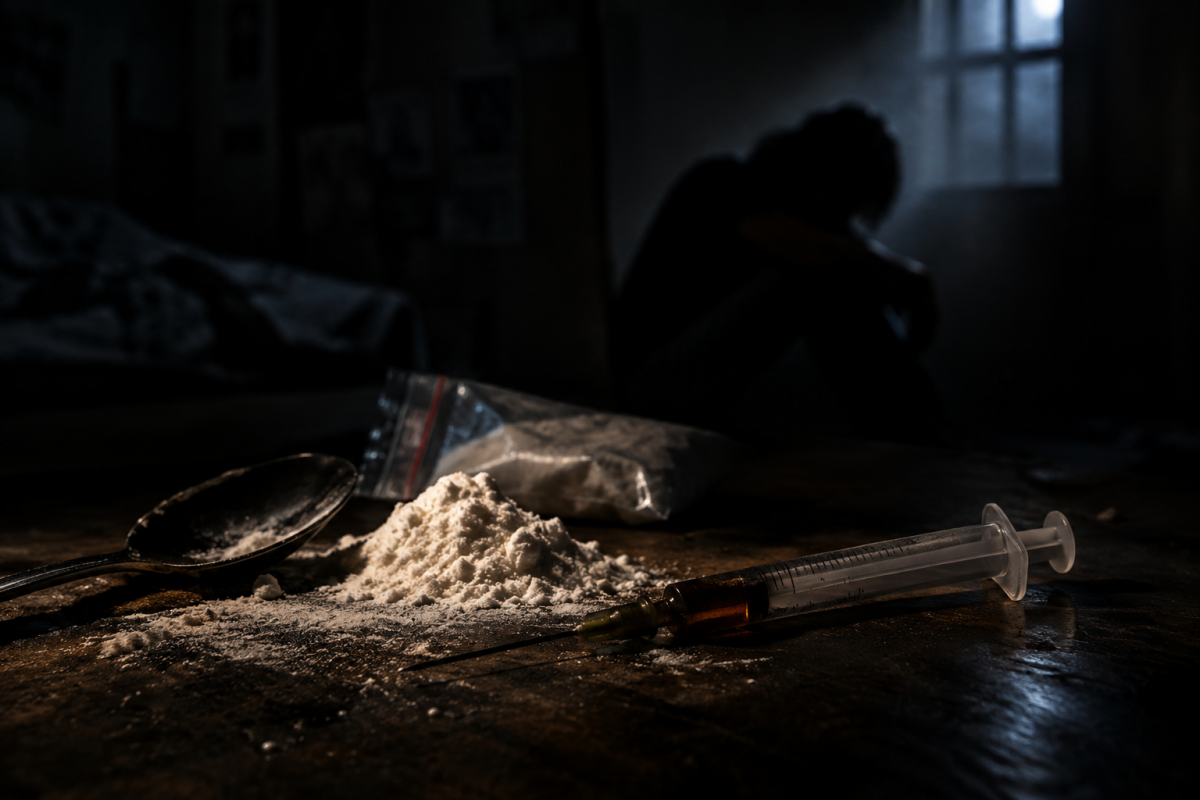
Heroin dependence is not simply a story about a drug. It can become a story about a person’s health, relationships, education, work, finances, family, dignity and future.
For families watching someone they love become dependent on heroin, the experience can be frightening and exhausting. What may begin as experimentation or occasional use can develop into repeated use, tolerance, dependence, cravings and continued use despite serious consequences.
But there is another side to this story:
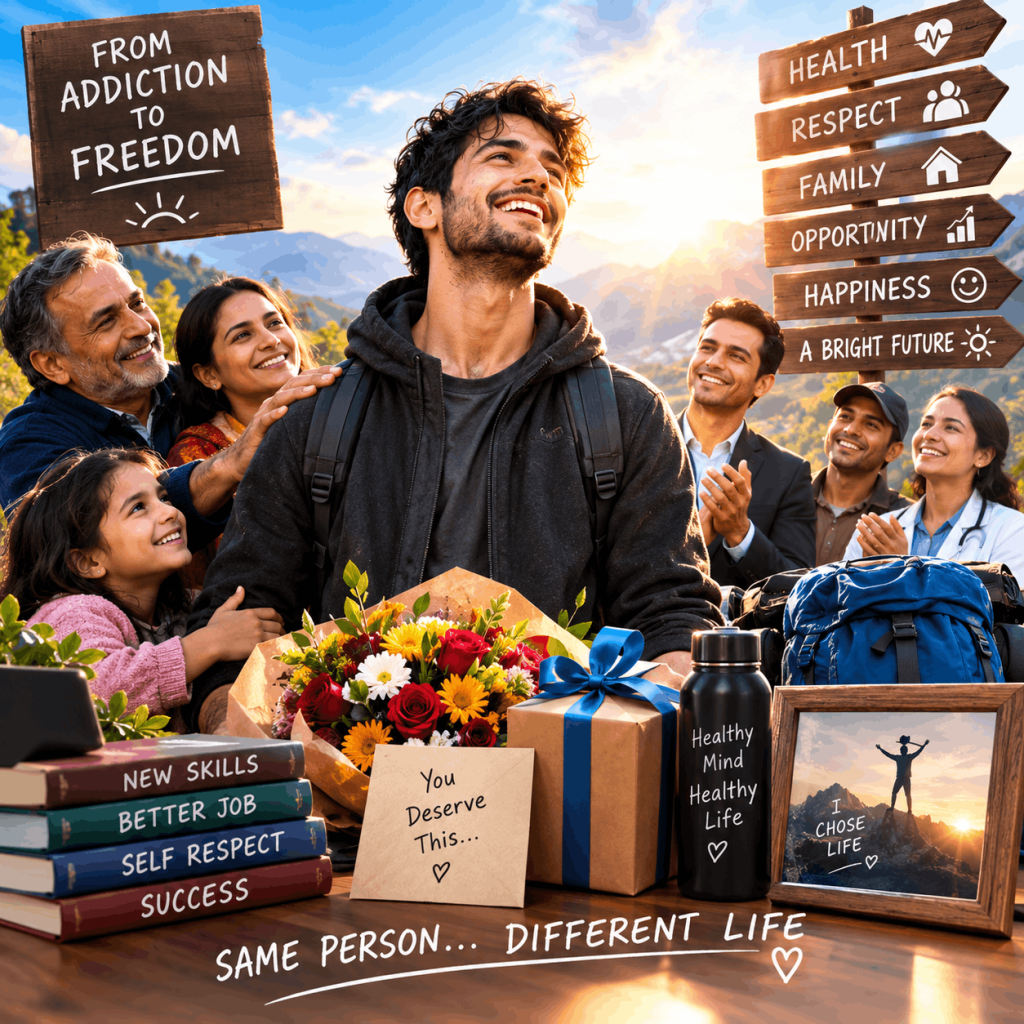
Recovery is possible.
Understanding the problem is the first step toward addressing it.
1. WHAT IS HEROIN?
Heroin is an illicit opioid derived from morphine, which itself comes from the opium poppy. After entering the brain, heroin is rapidly converted into morphine and acts on opioid receptors.
These receptors are involved in pain, reward, pleasure, breathing and other important functions.
Why can heroin become so addictive?
- It can produce intense euphoria.
- The brain’s reward system becomes involved.
- Repeated use can lead to tolerance, meaning more of the substance may be needed to produce an effect.
- Dependence can develop, producing withdrawal symptoms when use is reduced or stopped.
- Cravings can become powerful and difficult to control.
WHO describes opioid dependence as a disorder involving impaired control over opioid use, increasing priority given to opioid use and continued use despite harm. Physical dependence and withdrawal may also occur.
This is why telling someone simply to “use willpower” often fails to address the full medical and psychological nature of opioid dependence.
2. CHITTA, SMACK, BROWN SUGAR — WHAT DO THESE NAMES MEAN?
In India and other parts of South Asia, street terms such as Chitta, Smack and Brown Sugar may be used for illicit opioid products.
However, these names do not guarantee a standardized chemical composition.
This is extremely important.
- Street drugs can vary greatly in strength and composition.
- A product sold under one name may not contain the same substances from one batch to another.
- Users may not know exactly what they are consuming.
- Unknown composition makes the effects and overdose risk difficult to predict.
Therefore, it is unsafe to assume that a street name tells you exactly what is inside a substance.
The name on the packet does not tell the whole story.
3. WHAT ELSE MAY BE PRESENT IN ILLICIT HEROIN?
One of the most dangerous aspects of illicit drugs is uncertainty.
Illicitly manufactured or distributed substances can contain unexpected substances or contaminants. Potent synthetic opioids such as fentanyl have been associated with overdose deaths, and WHO notes evidence that fentanyl may be added to illicit products such as heroin without users knowing.
Why does this increase danger?
- Potency may be unpredictable.
- The person may unknowingly consume another opioid.
- Other medicines or substances may interact with opioids.
- Combining opioids with alcohol or other substances that suppress breathing can increase overdose risk.
- A person’s tolerance can change after a period without use, increasing risk when opioid use resumes.
This is why an apparently familiar product can still produce an unexpected and life-threatening reaction.
A crucial message for families
You cannot reliably judge the contents or strength of an illicit drug by its colour, name, appearance or what someone says it contains.
4. WHAT HEROIN CAN DO TO THE HUMAN MIND, BODY AND INNER LIFE
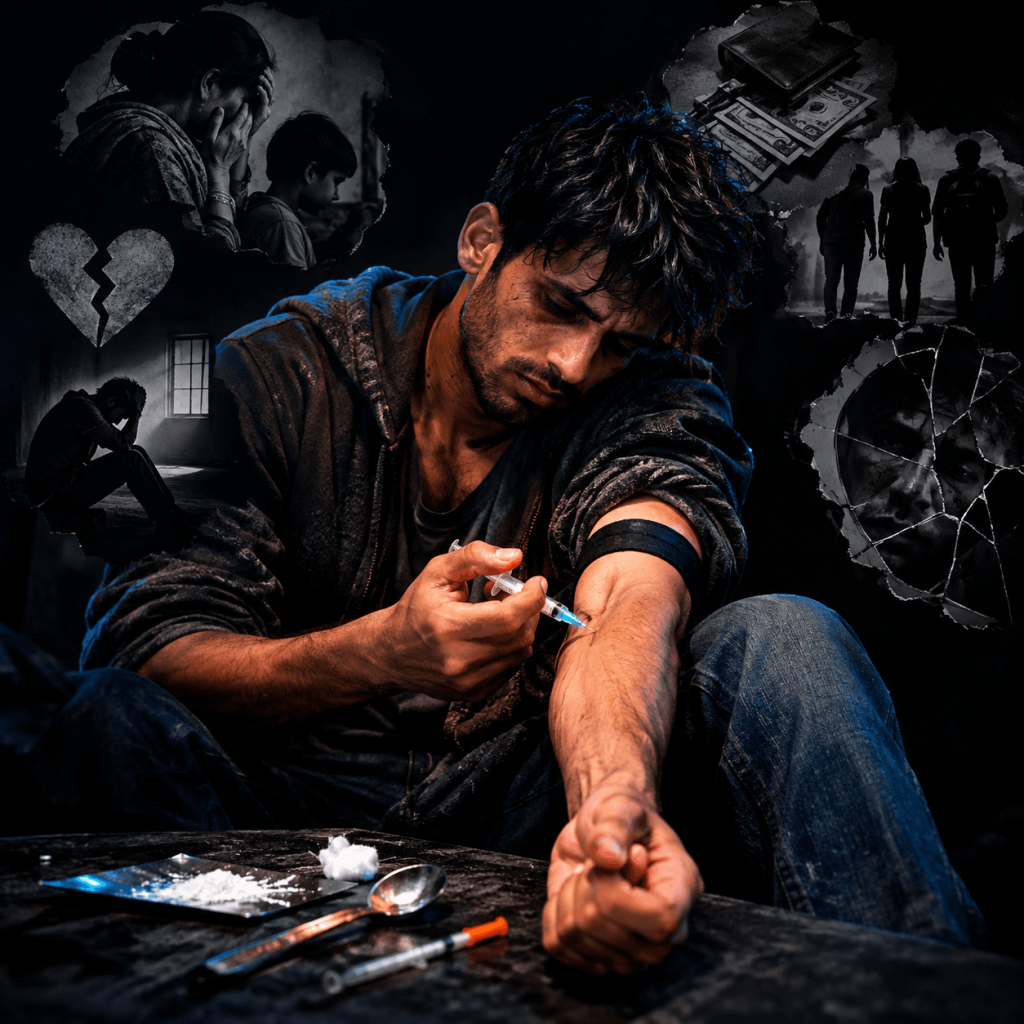
Heroin dependence can affect far more than one organ.
🧠 The mind
Repeated opioid use can become strongly connected with the brain’s reward and motivation systems.
A person’s priorities may gradually change.
Activities that once mattered—education, work, hobbies, relationships and responsibilities—can lose importance compared with obtaining and using the drug.
Possible effects include:
- Strong cravings
- Difficulty controlling use
- Reduced attention to responsibilities
- Changes in mood and behavior
- Social withdrawal
- Anxiety or emotional distress
- Continued use despite obvious harm
🫀 The body
Opioids can cause sedation and slow breathing. Overdose can become fatal when breathing is severely suppressed.
Long-term drug use can also be associated with a range of health and social problems, particularly when drugs are injected or used alongside other substances.
🌱 The inner life
The word “spirit” can mean different things to different people. In a recovery context, it can describe a person’s sense of purpose, values, relationships, self-respect and hope.
Addiction can gradually narrow life around the substance.
Recovery therefore involves more than physical abstinence.
It can also involve asking:
Who am I without the drug?
What kind of life do I want?
What relationships do I want to rebuild?
What do I want my future to look like?
5. HOW HEROIN CAN DAMAGE THE NEXT GENERATION
The consequences of heroin dependence can extend beyond the individual.
Families can experience:
- Financial pressure
- Broken trust
- Conflict
- Emotional exhaustion
- Disruption of education and employment
- Social isolation
- Fear about the person’s future
There are also important infectious-disease risks, particularly when drugs are injected.
Sharing contaminated injecting equipment can transmit HIV and viral hepatitis, including hepatitis C. WHO identifies HIV and viral hepatitis among important harms associated with opioid use, particularly in populations exposed to injection-related risks.
What about fertility and sexual health?
Substance dependence can be associated with sexual and reproductive health problems, but we should not tell readers that heroin automatically causes infertility.
Sexual and reproductive effects can vary between individuals and can be influenced by the drug, general health, nutrition, infections, lifestyle and other medical factors.
That distinction matters.
The goal is not to frighten people with exaggerated claims. The real facts are serious enough.
6. HEROIN, INDIA AND THE WIDER SOCIAL COST
The illicit drug trade is not only a health issue.
It can also create wider social and economic harm.
Illegal drug markets can generate:
- Organized criminal activity
- Financial exploitation
- Violence and instability
- Loss of productivity
- Family disruption
- Pressure on healthcare and social services
- Vulnerability among young people
From this perspective, reducing heroin dependence is not merely an individual objective—it is also part of protecting families, communities and the future of young people.
But there is an important distinction.
A person suffering from addiction should not automatically be labelled a criminal or an enemy of the country.
The illicit market profits from addiction. The person with a substance-use disorder needs appropriate help.
Reducing demand, preventing new addiction and providing effective treatment can all contribute to reducing the broader damage caused by illicit drug markets.
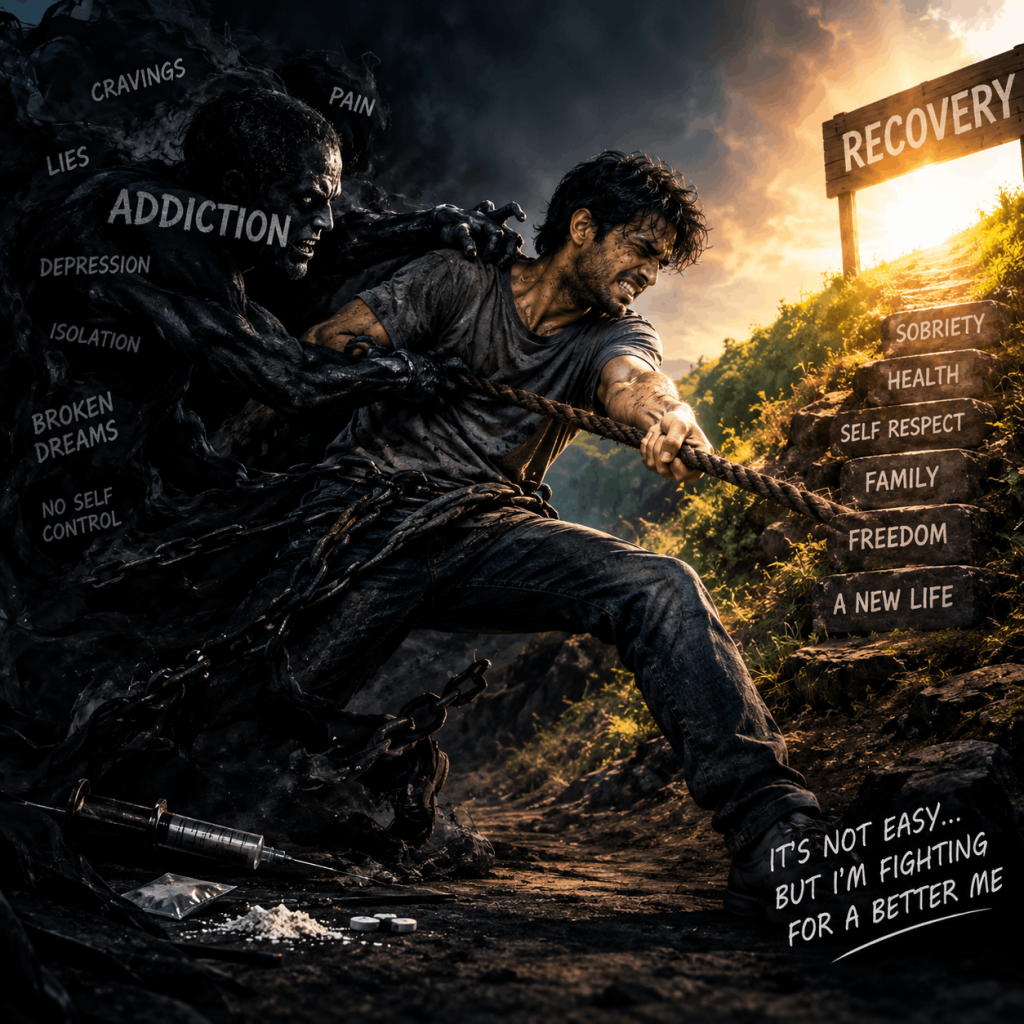
7. HOW CAN HEROIN DEPENDENCE BE OVERCOME?
There is no single recovery method that is appropriate for every person.
Treatment should begin with an appropriate assessment of the person’s:
- Pattern and duration of opioid use
- Physical health
- Mental health
- Other substance use
- Previous treatment experiences
- Family and social circumstances
- Risk of overdose
- Recovery goals
Recovery may involve several components:
- Medical assessment
A healthcare professional can determine what level of care is appropriate. - Withdrawal management
Withdrawal can be uncomfortable and sometimes medically complicated. It should be managed appropriately rather than treated as a test of willpower. - Evidence-based treatment
WHO recommends a range of treatments for opioid dependence, including opioid agonist treatment with medicines such as methadone or buprenorphine, as well as psychosocial support and other clinically appropriate options. - Counseling and behavioral support
Understanding triggers, habits, emotions and decision-making can be an important part of recovery. - Family involvement
Constructive family support can strengthen recovery. - Relapse prevention
Recovery planning should continue beyond the initial withdrawal period.
One important truth:
Detoxification alone is not the same thing as recovery.
WHO guidance emphasizes ongoing treatment and support because withdrawal without continuing care carries a significant risk of returning to opioid use.
8. WHY TIME MATTERS IN REHABILITATION
At Rehab Start A Fresh, we believe families should understand an important reality:
An addiction that developed over months or years cannot reasonably be expected to disappear overnight.
A person may need time to:
- Establish a structured routine
- Break old patterns
- Learn healthier coping strategies
- Understand personal triggers
- Rebuild relationships
- Develop discipline
- Work on emotional and behavioral issues
- Prepare for life after residential care
Our residential program is generally planned for approximately 6–8 months or longer, depending on individual circumstances, progress and family requirements.
This should not be interpreted as a guaranteed medical timeframe for every person.
Recovery is individual. Progress matters more than the calendar.
9. WHAT MAKES A SUPPORTIVE REHABILITATION ENVIRONMENT IMPORTANT?
A rehabilitation centre is not simply a building where someone stays.
The environment can influence daily routines and behavior.
At Rehab Start A Fresh, we place importance on:
🧹 Cleanliness
Clean and hygienic surroundings can promote dignity, comfort and healthy habits.
🧠 Structure
A predictable routine can help individuals focus on recovery rather than returning to old patterns.
🤝 Counseling
Individuals need opportunities to understand their behavior, emotions and recovery challenges.
👨👩👦 Family involvement
Recovery does not happen in isolation. Families also need education and support.
🌱 Positive habits
Recovery involves building a life that does not revolve around drugs.
10. WHAT SHOULD HAPPEN AFTER LEAVING REHAB?
Leaving residential care is not the finish line.
It is the beginning of another important stage.
One useful recovery principle is to identify and reduce exposure to personal triggers.
The “People, Places and Things” principle
A recovering person may need to reconsider:
- People associated with previous drug use
- Places where drugs were obtained or consumed
- Objects, routines or situations strongly associated with use
But this should be personalized rather than applied blindly.
And what about sex, power and money?
These areas deserve thoughtful attention because relationships, money, status, conflict and impulsive decisions can become triggers for some people.
The goal should not be to fear normal life.
The goal is to recognize personal vulnerabilities and make responsible decisions while recovery is still becoming stable.
11. WHAT ABOUT MOBILE PHONES AND SOCIAL MEDIA?
A mobile phone is not automatically dangerous.
However, for some people in early recovery, a phone can provide access to:
- Previous drug contacts
- Drug-related social networks
- Triggering conversations
- Stressful situations
- Unhealthy online habits
Therefore, a rehabilitation program may decide to restrict or gradually reintroduce phone access according to its rules and the individual’s recovery plan.
The important principle is:
Technology should support recovery—not reconnect someone with the life they are trying to leave behind.
12. THE FIRST YEAR AFTER REHAB: BUILDING A LIFE, NOT JUST AVOIDING A DRUG
There is no scientifically reliable rule that says every person will be “90% recovered” after one year.
Recovery varies greatly.
Instead of promising a percentage, we should look for meaningful indicators such as:
- Continued abstinence or progress toward the person’s treatment goals
- Stable routines
- Improved relationships
- Better emotional regulation
- Reduced exposure to high-risk situations
- Participation in follow-up care
- Honesty about cravings and setbacks
- Willingness to ask for help
- Increasing responsibility
Honesty matters.
A person who can honestly say:
“I need help today.”
may be taking a much stronger recovery step than someone who hides a problem to appear strong.
13. A MESSAGE TO PARENTS AND FAMILIES
“One person may consume the drug, but the consequences can be felt by the whole family.”
Parents often spend months or years trying everything they can think of.
They may plead.
They may argue.
They may forgive.
They may give money.
They may take away money.
They may promise another chance.
Sometimes they reach a point where they realize:
“We cannot solve this alone.”
That is not failure.
It may be the moment to seek professional help.
If you are choosing a rehabilitation facility, ask questions.
Ask:
- Who provides medical care?
- How is withdrawal managed?
- What happens if an emergency occurs?
- Is there appropriate clinical supervision?
- What counseling is provided?
- How is the family involved?
- What happens after discharge?
- Is there a relapse-prevention plan?
- What are the rules regarding phones, visitors and outside contact?
- How are medicines prescribed and monitored?
Do not choose a centre simply because it promises a quick cure.
Be careful with “substitute” or withdrawal medicines.
Medicines such as buprenorphine and methadone have established roles in evidence-based treatment of opioid dependence when prescribed and monitored appropriately. They should not be described as universally harmful or universally necessary.
Likewise, medicines such as tapentadol or other drugs should not be used as an improvised replacement for heroin or withdrawal treatment without appropriate medical supervision.
A good rehabilitation decision should be based on safety, appropriate clinical assessment, qualified care and a realistic recovery plan.
14. RECOVERY IS POSSIBLE
Perhaps the most important message of this entire article is this:
Heroin dependence does not have to be the end of a person’s story.
Treatment works.
Recovery happens.
Lives can change.
But recovery requires more than saying:
“I will never use again.”
It requires action.
It requires honesty.
It requires discipline.
It requires support.
It requires learning from setbacks instead of hiding them.
And it requires developing a life in which the drug no longer has the central role.
WHO states that effective treatments for opioid dependence exist and recommends evidence-based treatment and psychosocial support.
15. A MESSAGE FROM REHAB START A FRESH
At Rehab Start A Fresh, our message is simple:
Do not leave the drug only for someone else. Leave it for yourself.
Leave it because your life matters.
Leave it because your health matters.
Leave it because your future matters.
Leave it because your family deserves to see you healthy.
But most importantly—
Choose recovery for yourself.
Self-care is not selfish.
Asking for help is not weakness.
Admitting the truth is not defeat.
It can be the beginning of strength.
We believe recovery is built on:
Truth.
Honesty.
Discipline.
Self-care.
Support.
Consistency.
And hope.
You were not born to become the person addiction created.
You can work toward becoming the person you choose to be.
🌱 A FINAL MESSAGE
To the person currently struggling with heroin:
Maybe you have lost time.
Maybe you have lost trust.
Maybe you have hurt people you love.
Maybe you have tried to stop before and returned to the drug.
That does not mean your story is over.
Do not let shame become another chain.
Ask for help.
Accept support.
Take recovery one day at a time.
And if you fall, do not disappear from the people trying to help you.
Come back.
Talk.
Be honest.
Start again.
You don’t have to rebuild your entire life in one day.
You only have to take the next right step.
💙 REHAB START A FRESH
Hope • Healing • Recovery • New Beginnings
Recovery is possible.
Recovery is real.
And a fresh start can begin today.
“Do not become the person addiction taught you to be. Give yourself the chance to become the person you were always capable of becoming.”
Start A Fresh.
Choose Recovery.
Choose Yourself.